How often to pump a septic tank, by household size
SC DES says inspect every 1 to 2 years and pump every 3 to 5. Your tank size and household size move the pump date, and here is by how much.

Ask five people how often to pump a septic tank and you'll hear five answers, usually based on what their parents did. The agencies give one range, and the reasons your number lands inside it or outside it are all things you can check.
The baseline
SC DES and Clemson Extension both say to have the system inspected every one to two years and to pump the tank every three to five years, depending on tank size and how many people use the system. The EPA is looser on inspections, saying at least every three years, and gives the same three to five years for pumping.
Those are averages. The EPA names four things that move your number:
- How many people live in the house.
- How much wastewater the household makes.
- How many solids go down the drain.
- How big the tank is.
What pumping is actually based on
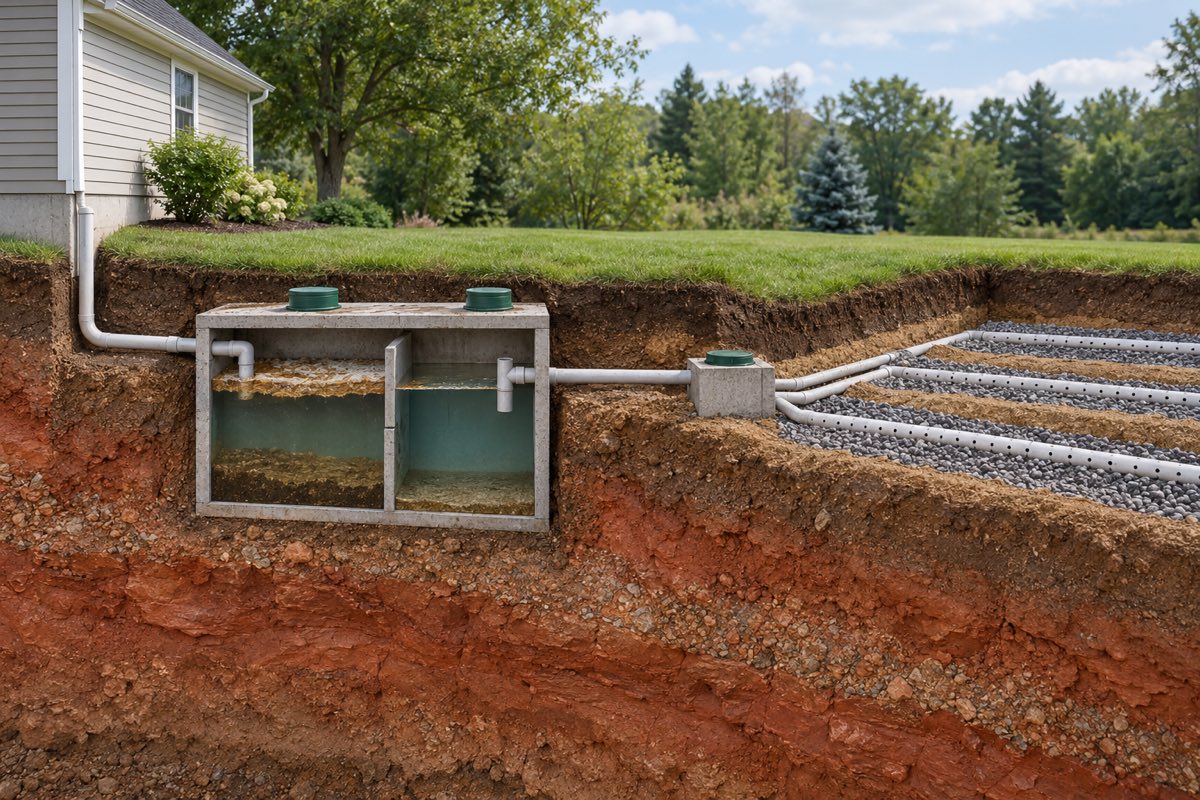
SC DES says pumping is due when solids fill one-third to one-half of the tank, and the only way to know is to have a contractor measure. Time and household size are a stand-in for that measurement.
It also helps to know what gets pumped. Virginia Cooperative Extension says the goal is to remove the heavy solids from the bottom and the grease from the top. The tank is pumped, not the drain lines or the distribution box, and a small amount of solids is normally left behind to restart the bacteria.
A table by tank size and household size
Virginia Cooperative Extension publishes estimates, adapted from a 1984 study by Karen Mancl, of pumping frequency by tank size and number of occupants. These are the rows most homes fall into.
| Tank size | 2 people | 4 people | 6 people |
|---|---|---|---|
| 750 gallons | 4.2 years | 1.8 years | 1.0 year |
| 1,000 gallons | 5.9 years | 2.6 years | 1.5 years |
| 1,250 gallons | 7.5 years | 3.4 years | 2.0 years |
| 1,500 gallons | 9.1 years | 4.2 years | 2.6 years |
Read this table as a rough guide, not a schedule. A family of four with a 1,000-gallon tank lands at about two and a half years, which is shorter than the 3 to 5 year rule of thumb. Two people with a big tank land far past five years on paper. Inspect every one to two years either way, as SC DES and Clemson advise, because a table can't see your tank.
Why a table can be wrong for your house
Three things in particular can push you earlier than the numbers say.
A garbage disposal adds solids. SC DES says a disposal adds up to 50 percent more solids to the tank, and the EPA says a tank with a disposal needs pumping more often.
Extra water adds up. SC DES notes that a single load of laundry can send up to 53 gallons through the system, and a leaky toilet can add hundreds of extra gallons over time. The EPA says a running toilet can waste as much as 200 gallons a day.
More people than the system was built for. The permit sizes your system by bedrooms. A house that's filled up with people, or a home turned into a rental, is working harder than the table assumes.
How to find your tank size
Start with paperwork. Clemson says old records can identify the tank size, type and drain field details. SC DES says its offices may have a copy of the permit for a home built in the last 20 years, and you'll need details like the tax map number, lot number, street address and original permit holder's name to speed up the search. For older homes, or if no permit turns up, SC DES says to have a septic contractor locate and identify the system.
If you've just bought the house, ask the seller for pumping invoices. Buying a home with a septic system covers what else to ask for.
A simple way to set your schedule
- Find out your tank size and how many people really live there, and use the table for a starting point.
- Have the system inspected so a contractor can measure the solids, and ask what they found and when they'd recommend coming back.
- Write the date, the contractor and the findings down and keep them with your septic permit.
- Set the next inspection date within one to two years. Move it earlier if you have a disposal, a full house or a lot of laundry.
Clemson recommends documenting every service: the contractor's name, the date and what was done.
One thing that doesn't replace pumping
You'll see products in stores that promise to cut down on pump-outs. SC DES says additives and treatments may do more harm than good, and they don't eliminate the need to pump. Some products can push solids and grease out into the drain field, where they cause the most damage. The EPA says additives aren't recommended for household systems. More on that in what not to flush or pour into your septic system.