5 signs your septic tank needs pumping
Slow drains, gurgling, odors, soggy ground and backups. What each one means and who to call.

Most septic tanks never announce that they're full. The first thing many owners notice is a symptom, and by then solids may already be heading toward the drain field.
Several of these signs point to a tank that's overdue, but some point to a problem further down the line, where pumping alone won't fix it. Either way the next step is the same: call a septic professional and have the system looked at.
1. Slow drains in more than one place
A single sink that drains slowly is usually a clog in that sink. When the tub, the toilets and the kitchen all slow down together, the problem is probably past the pipes under your house. Clemson Extension lists consistently slow or clogged sinks and toilets as a sign of septic failure, and the EPA lists slow drains too.
2. Gurgling from the plumbing
Gurgling sounds when you flush or run the washer show up on the EPA's list of warning signs. It can mean the system is struggling to move wastewater along, so treat it as a warning and watch for the other signs.
3. Sewage smell indoors or in the yard
A strong sewage odor around the tank, around the drain field or inside the house is on the EPA's list and Clemson's. A smell that keeps coming back is a reason to call.
4. Wet, spongy or unusually green ground
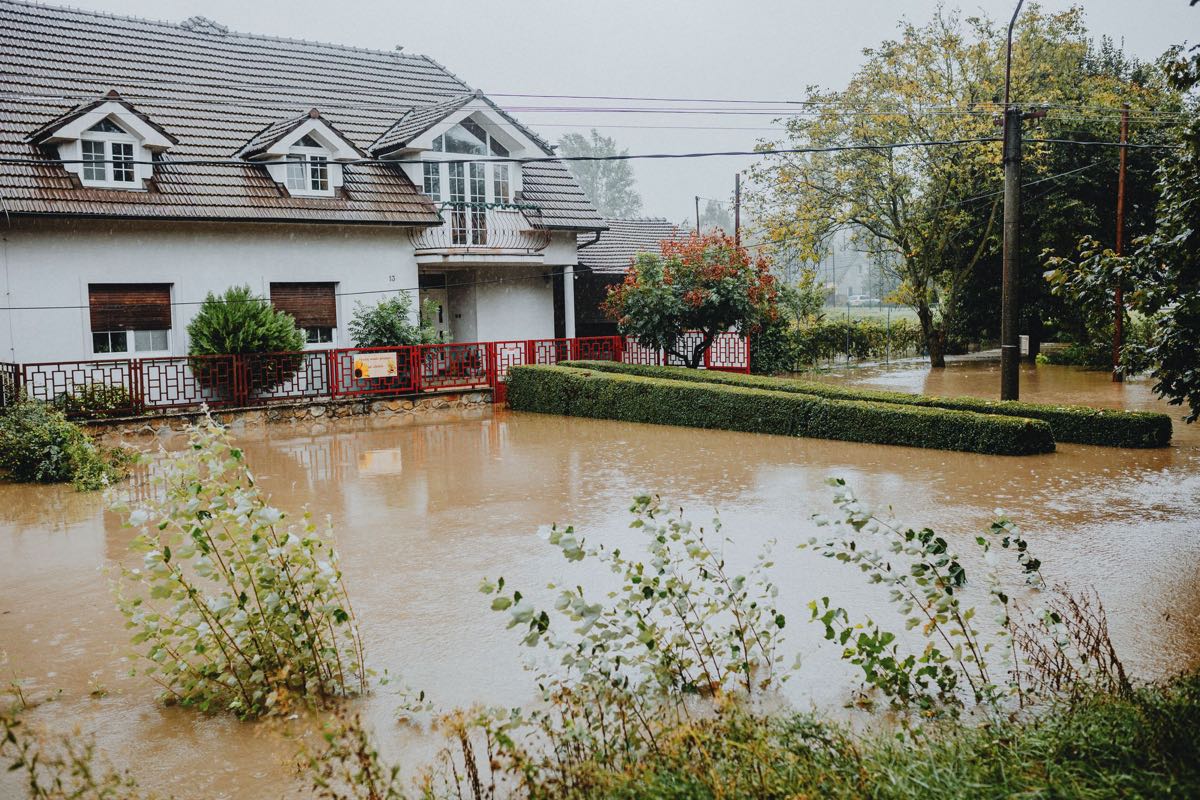
The drain field is supposed to soak up water below the surface. Standing water, soft ground or a bright green, spongy patch of grass over the field means wastewater is coming up where it shouldn't. Clemson adds that dead patches can show up too, and so can a visible tank.
The South Carolina Department of Environmental Services (SC DES) puts it simply: when grass outlines the tank or the drain field, that's a sign of a leak or another problem.
5. Sewage backing up into the house
This is the loudest sign and the one nobody misses. SC DES calls sewage backing up into the house and a drain field saturated with wastewater the two most obvious signs of failure. Stop using water and read what to do when your septic system backs up.
How a tank actually gets "full"
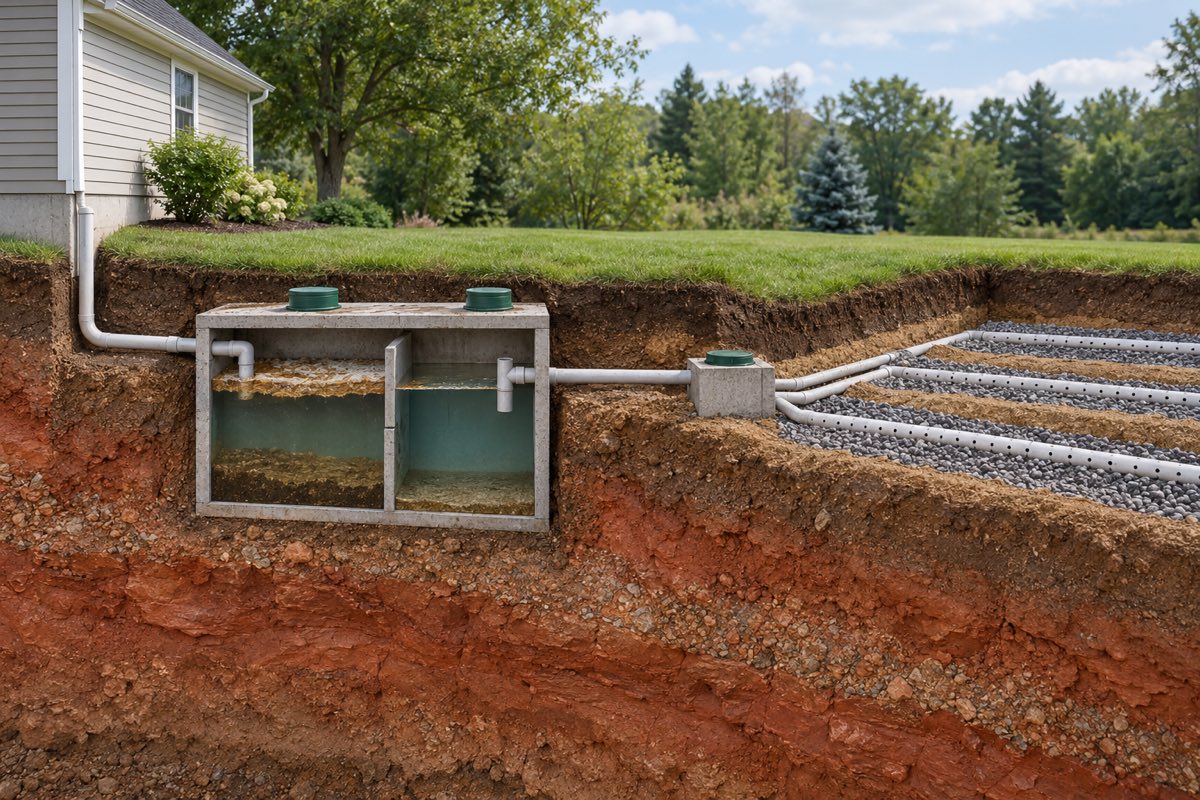
Every tank holds three layers. Grease and light solids float as scum, heavy solids settle as sludge, and the liquid between them flows out to the drain field. Bacteria break down some of the solids, but not all of them. Virginia Cooperative Extension says bacteria can turn up to half of the solids into liquids and gases, so the rest builds up over time.
SC DES says most home tanks need cleaning every three to five years, and pumping is due when solids fill one-third to one-half of the tank. You can't see that from the lawn. A contractor measures it. SC DES says pumping is recommended when either of these is true:
- The bottom of the scum layer is within 6 inches of the bottom of the outlet tee.
- The top of the sludge layer is within 12 inches of the outlet tee.
If solids pile up past that point, they can get pushed out of the tank and into the drain field, where they clog the gravel and soil. SC DES names that as a leading cause of backups and surfacing wastewater, and it's why the drain field is the expensive part of the system to fix.
If none of that is happening
No symptoms doesn't mean no problem. SC DES and Clemson Extension both say to have a septic professional inspect the system every one to two years and to pump it every three to five years. Virginia Cooperative Extension adds one more trigger: if you don't know when your tank was last pumped, have it inspected.
Your household and tank size change the timeline, so check how often to pump by household size before you pick a date.
Don't open the tank to look
SC DES warns never to lean over a septic tank opening or put your head inside, because gases can overcome a person quickly and a fall into the tank can kill. Leave the lid on, mark where it is, and let the contractor do the checking.
What to have ready when you call
A few details make the first conversation faster:
- When the tank was last pumped, if you know.
- How many people live in the house and whether anyone moved in or out recently.
- Whether it rained heavily in the days before the problem started.
- Where you've seen water, smell or soft ground, and for how long.
If you don't know where the tank is, that's fine. A contractor can help locate it, and SC DES may have a copy of the permit on file if the home was built in the last 20 years. More on that in buying a home with a septic system.